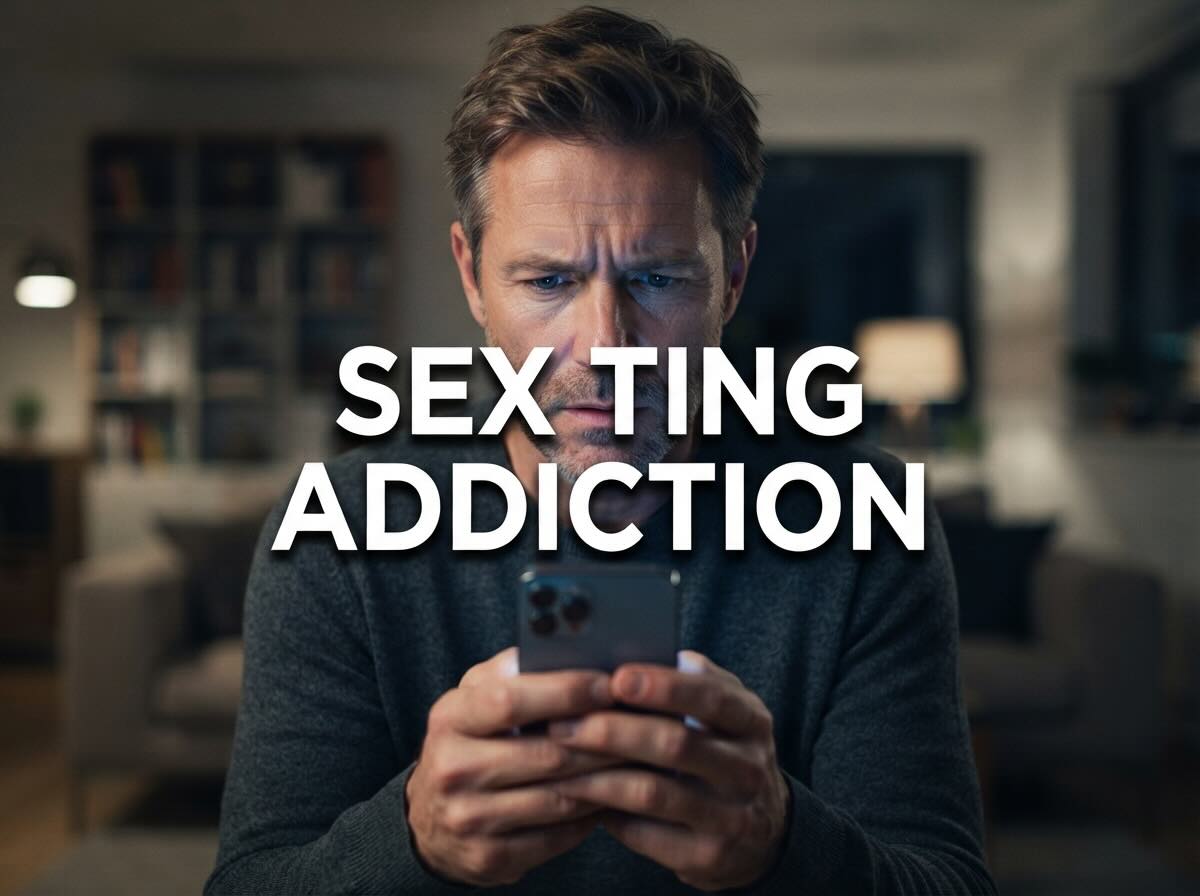
When these experiences become a regular source of emotional relief, the desire to establish sexual contact online may arise in circumstances that have little to do with sexual arousal.
Previous attempts to stop can help identify the reasons behind the behavior. Returning to sexting after an argument with a spouse suggests a different psychological motivation from spending several hours seeking sexual stimulation every evening. Both patterns can become compulsive, but understanding what prompts them determines which behavioral changes are likely to help.
What Is Sexting Addiction?
Sexting addiction describes persistent difficulty controlling the exchange of sexually explicit messages, photographs or videos despite the harm the behavior causes. The term is used to describe problems ranging from an inability to stop contacting strangers through dating applications to maintaining multiple sexual conversations that interfere with employment, sleep or an established relationship.
Sexting itself is common among adults. In a 2019 study published in Archives of Sexual Behavior, researchers Zara Brodie, Claire Wilson and Graham Scott surveyed 244 adults, of whom 77.6% reported previous sexting experience. Participants who had sexted reported greater sexual satisfaction than those who had never done so, although the frequency of sexting was unrelated to overall sexual or relationship satisfaction.
For someone concerned about their own behavior, the distinction becomes apparent when sexual messaging begins to occupy time they intended to spend elsewhere, continues despite consequences they wish to avoid or repeatedly resumes after deliberate attempts to stop.
Can Sexting Be an Addiction?
Compulsive sexting can occur as part of compulsive sexual behavior disorder (CSBD), recognized by the World Health Organization under code 6C72 of the International Classification of Diseases, 11th Revision (ICD-11). Sexting addiction has no separate diagnostic classification, and CSBD is currently classified as an impulse control disorder.
The diagnostic requirements described by Shane Kraus and colleagues in World Psychiatry include persistent difficulty controlling sexual behavior, generally lasting six months or longer, accompanied by considerable distress or impairment in daily life. Sexual activities may become so time-consuming that personal responsibilities are neglected, while repeated efforts to reduce them produce little lasting change.
Clinicians must also distinguish distress associated with impaired control from distress arising entirely from moral or religious disapproval of sexual behavior. An individual who feels guilty after exchanging sexual messages may require psychological support without meeting the diagnostic requirements for CSBD.
Signs of Sexting Addiction
People often begin questioning their sexting habits after discovering how much time they have spent online or after their behavior has damaged a relationship. Others recognize a problem when attempts to stop become increasingly elaborate, involving deleted accounts, restrictions on phone use and promises they subsequently find themselves unable to keep.
| Sign | What You May Recognize in Your Own Behavior |
|---|---|
| Difficulty stopping | You repeatedly return to conversations or accounts you had decided to abandon. |
| Preoccupation | You spend considerable time thinking about who might respond, when you can next check your phone or how to establish another connection. |
| Neglect of sleep | You remain online late into the night despite knowing that you need to work or attend to family responsibilities the following morning. |
| Emotional reliance | You turn to sexting whenever you feel rejected, lonely, unattractive or dissatisfied with your relationship. |
| Repeated relationship conflicts | You continue exchanging sexual messages despite previous arguments, discoveries or agreements to stop. |
| Declining satisfaction | You continue seeking sexual conversations even though they provide progressively less enjoyment. |
| Interference with work | You interrupt professional responsibilities to maintain conversations or spend working hours anticipating responses. |
| Increasing personal risk | You continue sharing private material despite previous experiences of harassment, unauthorized distribution or threats. |
Frequent messaging and sexual privacy are insufficient grounds for identifying an addiction. The concern is whether you retain control over the behavior when you have a reason to stop.
Am I Addicted to Sexting?
Consider your most recent attempt to stop sexting. What prompted the decision, how long did you maintain it, and what happened immediately before you returned to the behavior?
If you deleted a dating application after your spouse discovered sexual conversations, reinstalling it several weeks later raises questions about what had changed during those weeks. You may have experienced another argument, become dissatisfied with your appearance or found yourself alone during a period previously occupied by online conversations. Identifying the circumstances under which the decision to stop was reversed can be more useful than counting the number of messages exchanged.
Persistent difficulty controlling sexting, particularly when accompanied by consequences you have repeatedly tried to avoid, warrants an assessment by a mental health professional experienced in compulsive sexual behavior. You do not need to establish that you have an addiction before arranging an appointment.
Why Is Sexting So Addictive?
Sexual messaging combines sexual stimulation with the psychological rewards associated with interpersonal communication. A conversation can satisfy curiosity, provide an opportunity to express sexual desire or reassure someone that another person finds them attractive. Unlike the consumption of conventional pornography, sexting allows the other participant to respond, express interest or withdraw their attention.
These responses can acquire considerable psychological importance when a person’s confidence, mood or sense of acceptance depends heavily on how others perceive them.
Sexual Attention and the Need for Validation
Receiving a compliment about one’s appearance can be particularly rewarding during periods of insecurity. Sexual attention may offer reassurance that is otherwise difficult to obtain, especially when someone feels undesirable within an established relationship or has experienced repeated rejection.
Researchers investigating sexting have identified body image reinforcement as a motivation distinct from sexual gratification. A 2022 study examining sexting motivations and outcome expectations explored how the anticipation of feeling attractive or desired influences participation in sexual messaging.
The difficulty with relying on sexual attention for reassurance is that another person’s response can temporarily improve self-perception without resolving the insecurity that prompted the conversation. If dissatisfaction with appearance returns, another expression of sexual interest may become desirable.
This may help explain why certain individuals repeatedly seek new contacts despite having little interest in meeting the people with whom they communicate. The reassurance obtained when another person expresses attraction can be more important to them than establishing a lasting sexual or romantic relationship.
When this pattern is present, psychological treatment should examine how the person evaluates their own attractiveness, how they respond to rejection and why reassurance from strangers carries such importance. Deleting a dating profile does not resolve dissatisfaction with one’s appearance.
Why You Keep Checking Your Phone
One of the characteristics of online communication is that the sender cannot determine when another person will respond. A message may receive an immediate reply, remain unanswered throughout the afternoon or produce an unexpectedly rewarding interaction several hours later.
In behavioral psychology, intermittent reinforcement describes circumstances in which a behavior is rewarded on some occasions but not others. Because previous instances of checking a phone have occasionally produced a desired response, the absence of a new message does not necessarily discourage further checking.
Consider the amount of time you spend anticipating conversations compared with the amount of time you actually spend enjoying them. Repeatedly opening an application without receiving a message, becoming distracted while waiting for a response or searching for new contacts when existing conversations become less engaging may indicate that anticipation itself has become an important part of the behavior.
Intermittent reinforcement offers a plausible explanation for this pattern, although researchers have not established a specific reinforcement schedule or neurological mechanism for sexting addiction. Claims that every sexual message produces an addictive dopamine surge oversimplify the relationship between reward-related learning and psychiatric disorders.
Using Sexting to Escape Loneliness and Emotional Distress
Online sexual contact can provide temporary companionship without requiring the development of an offline relationship. For adults who experience social anxiety, isolation or difficulties discussing intimate matters with a partner, sexual messaging may offer a relatively accessible form of interpersonal contact.
When the relief obtained from an activity increases the likelihood of repeating it, psychologists describe the process as negative reinforcement. The term refers to the removal or reduction of an unpleasant experience, such as anxiety or loneliness.
If you regularly begin sexting after an argument, the conversation may allow you to avoid thinking about the disagreement. That relief can reinforce the behavior even when you are aware that discovering the conversation would create further conflict. Returning to sexting after subsequent arguments may gradually establish an association between relationship difficulties and seeking sexual attention elsewhere.
Understanding this association can change how you approach stopping. Restricting access to messaging applications may interrupt the behavior, but you will still need a way to address loneliness, tolerate rejection or discuss problems that have previously led you to seek relief through sexual contact.
What Research Reveals About Sexting Motivations
A 2023 study by Alessandra Ragona and colleagues examined the motivations, expectations and psychological characteristics associated with sexting among 209 adolescents and young adults in Italy.
The researchers assessed three categories of motivation: sexual purposes, body image reinforcement and instrumental or aggravated reasons. They also examined participants’ expectations of sexting, psychological defense mechanisms and problematic social media use.
The study identified associations between positive expectations about sexting and participants’ reported behavior. Because the researchers collected self-reported information at a single point in time, they could not establish whether these expectations encouraged participation or developed as a consequence of previous sexting experiences.
More recent research has examined how the reasons for sexting influence subsequent experiences. In 2025, Sandra Meier and colleagues published a longitudinal study in Archives of Sexual Behavior involving 405 adults aged 18 to 29 who completed questionnaires six weeks apart.
More frequent sexting was associated with more negative experiences, partly through motivations involving pressure or internal obligation. Positive experiences were associated with sexting motivated by personal choice and interest. The researchers did not diagnose compulsive sexual behavior, but their findings establish that frequency alone cannot adequately explain the psychological consequences of sexting.
Is Sexting Bad for Mental Health?
Consensual sexting can contribute to intimacy and sexual satisfaction between adults. Its psychological consequences become more concerning when someone feels pressured to participate, depends heavily on the attention they receive or continues despite difficulty controlling the behavior.
A study published in Archives of Sexual Behavior in 2022 found that freely chosen motivations for sexting were associated with more pleasant emotional experiences, while motivations involving pressure were associated with less pleasant affect. Neither motivational category showed a significant relationship with overall life satisfaction or unpleasant affect.
For someone experiencing compulsive sexting, mental health difficulties may also arise from the circumstances surrounding the behavior.
Anxiety
Anxiety can develop when sexual messaging involves concealed relationships, particularly if the person spends considerable time anticipating discovery. Ordinary situations, such as leaving a phone unattended or receiving a notification while spending time with a spouse, may become sources of concern.
Someone who originally turned to sexting to alleviate anxiety may consequently acquire additional sources of anxiety through the behavior itself. If sexual messaging remains their preferred way of obtaining emotional relief, these new concerns can contribute to its continuation.
Depression and Loneliness
Receiving sexual attention may temporarily alleviate feelings of isolation, but online interactions can become increasingly unsatisfying when the person also wants companionship, emotional intimacy or a stable relationship.
Depression may precede compulsive sexting or develop alongside the interpersonal and practical difficulties associated with it. A clinician assessing both concerns should establish whether depressive symptoms began before the problematic behavior, whether they persist during periods without sexting and whether the person has gradually withdrawn from activities they previously enjoyed.
Research has not established a direct causal relationship between compulsive sexting and depression. Nevertheless, persistent low mood, social withdrawal and loss of interest in everyday activities warrant attention independently of the sexual behavior.
Sleep and Concentration
When sexual conversations continue late into the night, the immediate consequences can include insufficient sleep and difficulty concentrating the following day. Repeatedly interrupting work to check messages can further interfere with productivity, particularly when attention remains focused on an anticipated response after the phone has been put away.
If your sexting habits primarily occur at night, restoring a regular sleep schedule may provide an early and measurable indication of improvement. It can also help establish whether your difficulty concentrating is associated with sleep loss, persistent preoccupation or another psychological concern.
How Sexting Addiction Affects Relationships
Discovering concealed sexual conversations can alter a partner’s understanding of the relationship far beyond the messages themselves. A spouse may begin reconsidering previous periods of emotional distance, unexplained absences or occasions when they were reassured that nothing was wrong.
The discovery can be particularly difficult when the person involved has previously expressed dissatisfaction with the relationship but continued seeking sexual attention elsewhere instead of discussing those concerns with their partner.
For the spouse who discovers the conversations, questions about sexual desirability may become intertwined with questions about honesty. They may wonder whether their partner remains attracted to them, whether they contributed to the behavior or whether the relationship they believed they had ever existed in the form they understood it.
These concerns deserve attention during recovery. Understanding why someone developed compulsive sexting habits does not automatically resolve the psychological consequences experienced by their partner.
Is Sexting Considered Cheating?
Sexting constitutes infidelity when it violates the sexual or emotional boundaries agreed upon within a relationship. Couples may have different expectations about sexual communication with other adults, but the absence of physical contact does not remove an existing commitment to sexual exclusivity.
A diagnosis of compulsive sexual behavior disorder cannot determine whether an individual has been unfaithful. That question depends on the agreements between the partners and the behavior that occurred.
If you are trying to understand whether your partner’s sexting reflects an addiction, consider whether they have made repeated, unsuccessful efforts to control the behavior. Infidelity can occur without compulsive sexual behavior, and describing every instance of concealed sexual communication as an addiction can prevent a relationship from addressing other problems, including deliberate deception or disagreement about sexual boundaries.
Why Does My Partner Keep Sexting After Promising to Stop?
A promise made after discovery may reflect a sincere desire to preserve the relationship. However, the distress experienced during a confrontation may temporarily discourage behavior that has developed over months or years without changing the psychological circumstances that sustain it.
If sexual attention has become a regular way of managing loneliness or insecurity, those feelings may return after the immediate relationship crisis has subsided. Without another way of responding to them, the person may again seek the reassurance previously obtained through sexting.
For a partner who has already experienced several discoveries, hearing that the behavior was driven by loneliness or emotional distress may provide little reassurance. They have already seen what happens when their spouse relies on intention alone to maintain behavioral change.
A treatment plan can establish what happens when urges return, which circumstances remain difficult to manage and how the individual intends to address them without resuming concealed communication. The spouse should not be expected to become responsible for monitoring their partner’s behavior throughout the day.
Can a Marriage Recover From Sexting Addiction?
Many spouses initially focus on whether the sexual conversations have ended, only to discover that stopping the behavior has left several questions about the marriage unresolved. They may still feel anxious when their partner travels, spends time alone or receives messages from unfamiliar contacts. Even ordinary expressions of affection can become difficult to interpret after discovering that previous assurances were accompanied by deception.
Reconciliation becomes particularly complicated when earlier discoveries were followed by apologies and renewed secrecy. The affected spouse may want the marriage to survive while feeling unable to accept another promise without evidence that the circumstances responsible for previous incidents have changed.
Individual psychotherapy can help the person struggling with compulsive sexting understand why they repeatedly sought sexual contact outside the marriage and why earlier attempts to stop were unsuccessful. Couples therapy addresses questions that cannot be resolved through individual behavioral change alone, including what the spouse needs to know, how future boundaries will be respected and whether both partners feel comfortable restoring sexual and emotional intimacy.
A spouse may experience considerable pressure to forgive once their partner begins treatment. They may also feel that leaving would mean abandoning someone who has acknowledged a psychological problem. Neither decision should be determined by the diagnosis. The spouse is entitled to consider how the relationship has affected their own mental health and whether remaining in it is something they genuinely want.
Sexting Addiction vs. Porn Addiction
Compulsive sexting and problematic pornography use can coexist, particularly when both provide readily accessible sexual stimulation or temporary relief from emotional distress. However, communication with another person introduces psychological rewards that conventional pornography cannot ordinarily provide.
Someone who primarily seeks confirmation of their attractiveness may continue compulsive sexting after substantially reducing pornography use because viewing sexual material does not offer the same interpersonal reassurance.
| Characteristic | Compulsive Sexting | Problematic Pornography Use |
|---|---|---|
| Primary activity | Exchanging sexual messages or material with other people. | Viewing sexually explicit material. |
| Interpersonal reinforcement | Attention, compliments, reassurance and perceived emotional connection. | Generally absent in conventional pornography. |
| Anticipation | Waiting for another person to respond or express interest. | Anticipating sexual stimulation or discovering unfamiliar material. |
| Relationship concerns | Concealed sexual contact, emotional involvement and violations of exclusivity. | Conflicting expectations about pornography use, concealment and difficulties with intimacy. |
| Privacy risks | Unauthorized distribution of intimate messages or identifiable images. | Exposure of viewing habits, payment information or account activity. |
Interactive sexual entertainment can incorporate characteristics of both activities. Treatment should therefore consider what the individual obtains from each form of digital sexual behavior, particularly when reducing one activity leads to increased participation in another.
How to Stop Sexting Addiction
If you have already deleted applications, blocked contacts and promised yourself that you will stop, repeating those measures without examining why they previously failed is unlikely to provide much new information. Begin by identifying what happened when you returned to sexting after your most recent attempt to stop.
Identify What You Are Seeking Through Sexting
For several days, record the circumstances in which you experience an urge to sext. Include the time, what you were doing beforehand, how you were feeling and what you expected to gain from a conversation.
Psychologists use a related method called functional behavioral assessment to examine the events preceding a behavior and the consequences that encourage its repetition.
| What to Examine | Example |
|---|---|
| What happened beforehand? | A disagreement with your spouse during the evening. |
| How were you feeling? | Rejected, angry or unattractive. |
| What did you want from sexting? | Reassurance that another person found you desirable. |
| What did you do? | Reopened a messaging account you had previously abandoned. |
| How did you feel afterward? | Temporarily reassured and distracted from the disagreement. |
| What remained unresolved? | The original relationship conflict and the circumstances leading to feelings of rejection. |
This exercise may reveal that urges occur predominantly in response to particular emotional experiences rather than throughout the day. It may also identify circumstances in which you experience the same emotions without returning to sexting, providing information about strategies you already use successfully.
Remove the Digital Access That Sustains the Behavior
Deleting applications can be useful when access to them has become closely associated with compulsive sexual communication. However, if previous attempts ended when you reinstalled the same application, consider what additional changes would interrupt that sequence.
Depending on your circumstances, these may include:
- Closing accounts maintained primarily for sexual conversations.
- Using application restrictions during periods when you regularly experience difficulty controlling the behavior.
- Disabling notifications that repeatedly interrupt your attention.
- Keeping your phone outside the bedroom if sexual messaging has been interfering with sleep.
- Ending contact with people involved in conversations you have decided to discontinue.
- Arranging regular check-ins with a therapist or trusted person when previous attempts to stop independently have been unsuccessful.
Complete avoidance of smartphones is rarely practical for someone who requires digital communication for work, family responsibilities and ordinary social contact. Restrictions should concentrate on the applications, contacts and circumstances associated with compulsive sexting.
Address the Emotional Circumstances Behind Your Urges
If you regularly turn to sexting when you feel lonely, restricting access to messaging applications may initially leave you more aware of how isolated you have become. This experience deserves particular attention if online conversations have gradually replaced friendships, social activities or ordinary communication with your partner.
Arranging regular contact with other people can help address isolation, although rebuilding neglected relationships may take time. If sexual attention has become your primary source of reassurance about your appearance, a therapist can help examine why you depend so heavily on these responses and how perceived rejection influences your self-esteem.
Relationship conflict presents a different difficulty. If sexting has become a way of avoiding arguments or dissatisfaction with your marriage, stopping may require discussing issues that you have previously found easier to avoid. Couples therapy may provide a suitable setting for those discussions when both partners want to participate.
Prepare for the Situations in Which You Previously Returned to Sexting
Attempts to stop often take place immediately after an unpleasant consequence, when the reasons for changing behavior are particularly apparent. Maintaining that decision several weeks later may be more difficult if the immediate distress has subsided and familiar circumstances return.
Develop a response for the situations you identified while recording your urges. If you usually reopen messaging applications after an argument, decide in advance what you will do during the period between the disagreement and your willingness to resume the conversation with your partner.
If you experience strong urges late at night, establish a routine that begins before the time you usually start sexting. Waiting until you are alone, tired and already considering reinstalling an application leaves several decisions to a period in which you have previously experienced difficulty controlling your behavior.
When an urge occurs, allow time for it to change before deciding how to respond. Leaving the triggering environment, continuing another activity or discussing the experience with a therapist can provide opportunities to practice responding differently.
When You Have Tried to Stop and Continue Returning to Sexting
Repeated unsuccessful attempts can affect your confidence in your ability to change, particularly when the behavior has already damaged important relationships. You may begin to regard another attempt as pointless or avoid discussing the problem because you are embarrassed by previous failures.
At this stage, arranging a professional assessment can help identify difficulties that self-directed efforts have overlooked. A therapist can examine whether compulsive sexting is associated with depression, anxiety, difficulties regulating emotions, problematic pornography use or another condition requiring treatment.
You can bring information about previous attempts to stop, including which measures helped temporarily and which circumstances preceded your return to the behavior. These details provide a more useful basis for treatment than a general description of how frequently you sext.
Treatment for Sexting Addiction
Treatment for compulsive sexting generally begins with psychotherapy and an assessment of any accompanying psychiatric conditions. The therapist should have experience discussing sexual behavior without assuming that frequent sexual activity, nontraditional relationships or particular sexual interests constitute a disorder.
In 2024, a scientific committee convened by the International Society for Sexual Medicine published recommendations on the assessment and treatment of compulsive sexual behavior disorder. The committee addressed diagnostic errors, psychiatric comorbidity and the importance of understanding patients’ sexual experiences before determining whether their behavior requires treatment.
Cognitive Behavioral Therapy
Cognitive behavioral therapy (CBT) can help identify the beliefs and behavioral routines that sustain compulsive sexting. Treatment may examine what sexual attention means to the individual, how they interpret rejection and why particular emotional experiences repeatedly lead to online sexual contact.
If receiving no response to a message is interpreted as evidence of being unattractive, for example, the resulting distress may encourage the person to seek reassurance from additional contacts. CBT can help examine the accuracy of that interpretation and develop alternative responses to perceived rejection.
In 2022, Stephanie Antons and colleagues published a systematic review of treatments for compulsive sexual behavior disorder and problematic pornography use. The researchers identified 24 eligible studies, only four of which reported randomized controlled trials. The available evidence supported further investigation and use of CBT-based treatments.
Most treatment studies examined broader compulsive sexual behavior or problematic pornography use. Consequently, the research cannot establish what proportion of people receiving CBT for compulsive sexting will recover or how many sessions they will require.
Acceptance and Commitment Therapy
Acceptance and commitment therapy (ACT) can be useful when a person repeatedly engages in sexual messaging to avoid uncomfortable emotions. The approach helps patients recognize thoughts and urges without automatically responding to them through established behaviors.
During treatment, an individual may examine what happens when they experience loneliness or rejection without immediately contacting another person for sexual reassurance. The therapist helps them develop the ability to tolerate these experiences while continuing activities that are consistent with their personal commitments.
Research into ACT for problematic pornography use and compulsive sexual behavior provides preliminary evidence for its application. Its effectiveness specifically for sexting addiction remains insufficiently studied.
Medication and Psychiatric Assessment
There is no medication specifically approved to treat sexting addiction. Psychiatrists may nevertheless consider medication for compulsive sexual behavior disorder or accompanying conditions such as depression and anxiety.
The World Federation of Societies of Biological Psychiatry guidelines discuss selective serotonin reuptake inhibitors (SSRIs) and naltrexone among potential pharmacological approaches to CSBD. These medications have different clinical indications and adverse effects, and their use for CSBD may be off-label.
Psychiatric assessment is particularly important if excessive sexual messaging developed suddenly alongside unusually elevated energy, rapid speech, impulsive spending or a reduced need for sleep. These symptoms can occur during mania, in which case the sexual behavior needs to be assessed within the context of a possible mood disorder.
Similarly, if compulsive sexting occurs primarily after drinking alcohol or using other psychoactive substances, treatment should examine how intoxication affects behavioral control and whether similar difficulties occur while sober.
Recovery Groups for Compulsive Sexual Behavior
Discussing compulsive sexual behavior can be difficult when you are concerned about how other people will interpret your experiences. Peer-support groups can provide opportunities to speak with adults who have encountered similar difficulties and learn how they manage situations associated with unwanted behavior.
Sex Addicts Anonymous (SAA) and Sex and Love Addicts Anonymous (SLAA) offer peer-support meetings and recovery resources.
Different groups may have different expectations concerning sexual abstinence, spirituality and recovery. Before participating, consider whether the approach is compatible with your treatment needs and whether it respects the distinction between consensual sexual expression and difficulty controlling sexual behavior.
Do You Need Rehab for Sexting Addiction?
Outpatient psychotherapy is generally an appropriate starting point for adults struggling with compulsive sexting who remain able to manage their everyday responsibilities. Attending regular appointments while continuing ordinary activities allows patients to apply behavioral changes in the circumstances where they previously experienced difficulty.
More intensive treatment may be considered when compulsive sexual behavior has substantially disrupted employment, relationships or personal functioning, particularly when previous outpatient treatment has been unsuccessful or significant psychiatric conditions require additional care.
Compulsive sexting does not ordinarily require medical detoxification. If alcohol or drug dependence accompanies the behavior, withdrawal management may be necessary for the substance use disorder and should be assessed separately.
If you are considering professional treatment, ask whether the provider has experience treating compulsive sexual behavior, how treatment goals are established and what approaches are used when the patient also experiences depression, anxiety or substance use problems.
For help finding addiction or co-occurring mental health treatment, contact SAMHSA’s National Helpline in the United States at 1-800-662-4357 or explore treatment resources through Rehabs.today.
Sextortion and the Risks of Compulsive Sexting
Intimate messages, photographs and videos can remain in another person’s possession after a conversation has ended. This creates particular difficulties when sexual communication involves unfamiliar contacts whose identities cannot be established.
Sextortion occurs when someone threatens to distribute intimate material unless the person provides money, further images or another form of compliance. A criminal may threaten to send the material to a spouse, employer or family member, exploiting the individual’s fear of discovery.
According to a 2025 notice issued by the Financial Crimes Enforcement Network, the FBI received nearly 55,000 reports involving sextortion and extortion during 2024, with reported financial losses totaling $33.5 million. These figures concern reported crimes rather than compulsive sexting specifically.
If someone is threatening to distribute your intimate material, preserve evidence of the communications, report the account and contact law enforcement before sending money or additional images. Paying an extortionist does not guarantee that the threats will end.
Fear that a spouse or employer may discover the material can make reporting particularly difficult. Discussing the situation with a trusted person or law enforcement can reduce the pressure to respond to demands while remaining isolated.
The FBI’s sextortion guidance provides reporting information and assistance for people experiencing these threats.
Frequently Asked Questions About Sexting Addiction
Can You Be Addicted to Sexting Without Wanting to Meet Anyone in Person?
Yes. The psychological rewards obtained through sexual messaging do not necessarily depend on meeting the other person. Receiving attention, being desired and developing a sense of intimacy through conversation may be sufficient to sustain the behavior.
If you repeatedly contact people without intending to establish a physical relationship, consider what you obtain from those interactions. Understanding whether you primarily seek sexual stimulation, reassurance or companionship can help explain why the behavior continues.
Can Sexting Addiction Cause Withdrawal Symptoms?
When you stop an activity that has regularly provided excitement, companionship or emotional relief, you may experience restlessness, persistent urges or an increased awareness of feelings you previously managed through that activity.
There is no established physiological withdrawal syndrome specific to sexting. However, if stopping leaves you experiencing considerable anxiety, depression or isolation, those difficulties may require psychological treatment. They may also help explain why previous attempts to stop were unsuccessful.
How Long Does It Take to Overcome Sexting Addiction?
You may be able to stop exchanging sexual messages immediately while continuing to experience urges for considerably longer. The time required to develop greater control depends partly on what has sustained the behavior and whether those circumstances remain present.
For instance, an individual who primarily sexts during periods of isolation may experience fewer urges after rebuilding social contact, while someone who relies on sexual attention to manage persistent insecurity may need longer-term psychological treatment.
Research has not established a standard recovery timeline for compulsive sexting. Progress can be assessed through the ability to maintain behavioral changes during circumstances that previously prompted a return to the activity.
Can Someone With Sexting Addiction Have a Healthy Sexual Relationship?
Yes. Treatment can help people regain control over particular sexual behaviors while maintaining consensual sexual intimacy. Permanently avoiding all sexual activity is not a universal treatment requirement for compulsive sexual behavior disorder.
There may be a period during which certain digital sexual activities need to be discontinued, especially when they remain closely associated with compulsive behavior. Within an established relationship, decisions about restoring intimacy should also account for the partner’s comfort, particularly if previous sexual messaging involved secrecy or infidelity.
Can Sexting Addiction Be Treated Without Telling My Partner?
You can arrange confidential individual psychotherapy to begin discussing compulsive sexting, previous attempts to stop and concerns about how disclosure may affect your relationship.
A therapist can help you consider the circumstances of the behavior, your existing relationship agreements and how continued concealment may affect both you and your partner. If disclosure involves a risk of violence, abuse or retaliation, personal safety should be addressed before planning such a conversation.
Individual treatment provides an opportunity to examine these concerns without requiring you to make immediate decisions about the future of the relationship.